Blog

  • For Pak, India’s Air Defence Network Is A ‘Never Seen Before’ Disruptive Tech: 10 Points

    How did India hit 13 targets including eight airbases at strategic locations in Pakistan so precisely? How did Pakistan fail so miserably? These questions have left experts around the world looking for answers. The government shared some insights.

    The IACCS explained in 10 points

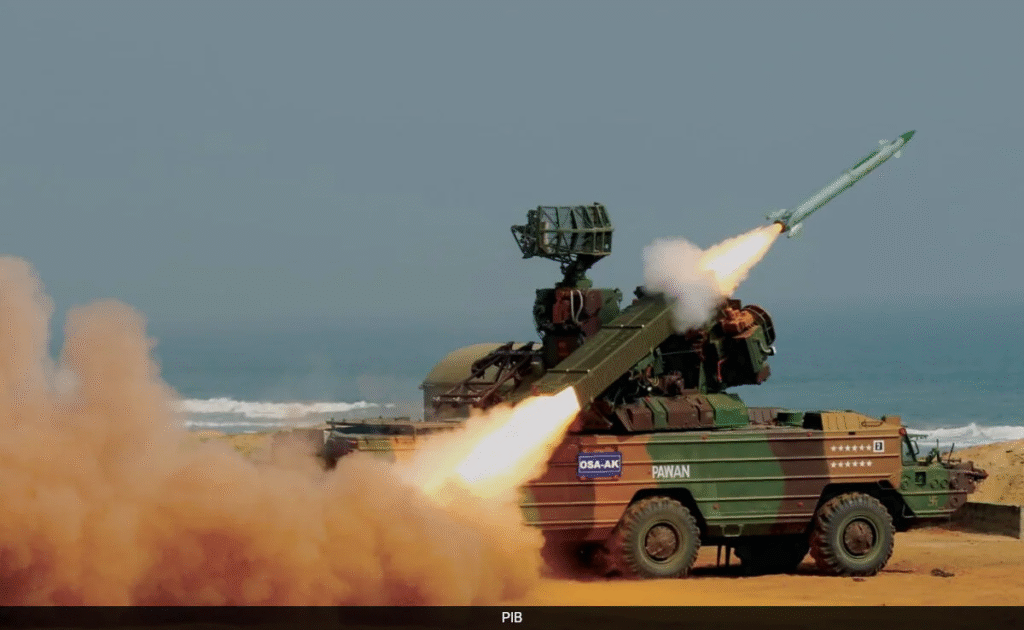
    1. On the intervening night of May 9 and 10, when Pakistan launched drone and missile attacks on Indian military and civilian areas, they met the homegrown impenetrable wall of self-defence called the ‘Akashteer’ system. It is part of the Integrated Air Command and Control System (IACCS) designed by the Indian Air Force (IAF). The IACCS was the tip of the spear in the air defence (AD) component of Operation Sindoor.
    2. India’s integrated AD system – which includes AD systems of the army, navy and the air force – was brought together by the IACCS, which gave the forces a net-centric operational capability, vital to modern-day warfighting.
    3. The IAF uses the IACCS to coordinate, integrate and control air defence assets like radars, surveillance systems like AWACS, drones, and fighter aircraft, to provide situational awareness and efficient command and control capabilities in the air domain.
    4. The Akashteer stopped Pakistani inbound airborne drones, missiles, micro UAVs (unmanned aerial vehicles) and other loitering munitions. It prevented them from entering Indian airspace. A disruptive element of the IACCS is its ability to absorb data from multiple feeds – weather, terrain and radar intercepts to make real-time decisions, reroute missions, and execute attacks autonomously. Pakistan defence experts have said they have never seen anything like this before.
    5. The Akashteer is also a completely homegrown product showcasing India’s Atmanirbhar Bharat prowess. Compared to Akashteer, Pakistan’s air defence (AD) network consists of Chinese-origin HQ-9 and HQ-16. They failed to intercept Indian projectiles spectacularly.
    6. Akashteer is a fully autonomous defence system. It provides a common, real-time picture to all involved parties (control room, radars, and air-defence guns), enabling coordinated AD operations. It is a system designed to automate detection, tracking and engagement of enemy aircraft, drones and missiles.
    7. Traditional models of AD rely heavily on ground-based radars, human-monitored systems, and surface-to-air missile batteries triggered by command chains. IACCS breaks that mould as its technology allows for monitoring of low-level airspace in battle areas and efficient control of ground-based AD weapon systems. It adds a new chapter to India’s strategic doctrine indicating a shift from defensive posturing to proactive retaliation against terror threats.
    8. Prime Minister Narendra Modi made it clear that India cannot be blackmailed by nuclear-armed Pakistan and, if need be, India would retaliate to root out terrorism from inside their territory. Akashteer’s presence in India’s military assets gives confidence of a clear edge over the terror-sponsoring state’s AD capabilities.
    9. Experts across the world are now terming IACCS as “a seismic shift in warfare strategy”. With this. India has joined the elite club of nations with fully automated and integrated AD C&R capability. In one line, IACCS has demonstrated that it sees, decides, and strikes faster than anything the world has fielded.
    10. The Akashteer system is also vehicle-based, which makes it mobile and easier to handle in hostile environments. The integration of multiple elements reduces the possibility of friendly fire, enabling quick engagement of hostile targets and guarantees safety to friendly aircraft in contested airspace.

  • “Water, Blood Cannot Flow Together”: PM Modi On Suspending Indus Waters Treaty

    Water and blood cannot flow together, Prime Minister Narendra Modi said in his first message to the nation after Operation Sindoor, India’s counterstrike in retaliation for the Pahalgam terror attack. The water and blood reference was a clear message to Pakistan that while India may have agreed to a ceasefire, it has no plans to lift the hold on the Indus Waters Treaty that it imposed a day after the heinous attack in which 25 tourists and a Kashmiri man were murdered in cold blood.

    “Terror and talk cannot take place together. Terror and trade cannot take place together. And, water and blood also cannot flow together,” Prime Minister Modi said in his message to the nation during which he warned Pakistan that India has only paused its action and its next move will depend on Pakistan’s actions.

    Stressing that Operation Sindoor had rewritten the rules of India’s response to terror, the Prime Minister said the country would respond to terror on its terms and that any form of nuclear blackmail — Islamabad’s oft-used trick — won’t be tolerated.

    A day after the Pahalgam terror attack, India took a series of diplomatic steps against Pakistan. The biggest of them was the suspension of the Indus Waters Treaty, a 1960 water-sharing agreement between the two countries signed by then Prime Minister Jawaharlal Nehru and Pakistan President Mohammed Ayub Khan. The suspension of the treaty was significant because such a move was not taken even during India’s wars with Pakistan.

    A day after the Pahalgam terror attack, India took a series of diplomatic steps against Pakistan. The biggest of them was the suspension of the Indus Waters Treaty, a 1960 water-sharing agreement between the two countries signed by then Prime Minister Jawaharlal Nehru and Pakistan President Mohammed Ayub Khan. The suspension of the treaty was significant because such a move was not taken even during India’s wars with Pakistan.

    The suspension of the treaty had drawn a sharp response from Islamabad, which said that it would see any move to divert water meant for it as an “act of war”. “Any attempt to stop or divert the flow of water belonging to Pakistan as per the Indus Waters Treaty and the usurpation of the rights of lower riparian will be considered as an Act of war,” it said. Pakistan also threatened to suspend all bilateral pacts with India, including the Simla Agreement, which validates the Line of Control.

    A tense couple of weeks later, India carried out airstrikes against terror infrastructure in Pakistan and Pakistan-Occupied Kashmir. Pakistan responded by heavy shelling and firing a barrage of drones and missiles across India’s north-western border, leading to civilian casualties. The projectiles were intercepted by India’s air defence system. New Delhi then decided on a firm response to the escalation and targeted Pakistan’s military establishments, including key airbases. Eventually, Islamabad sought a ceasefire and India agreed with a warning that its forces remain on high alert and would respond to any misadventure.

  • “Blind Lust To…”: Omar Abdullah, Mehbooba Mufti’s Spat Over Pak Water Pact

    The Tulbul Navigation project – that seeks to rejuvenate the Jhelum-fed Wular lake in Bandipora district – was kicked off in 1987 but stalled in 2007 amid objections from Pakistan.

    A public spat broke out between Jammu and Kashmir Chief Minister Omar Abdullah and his predecessor Mehbooba Mufti on social media on Friday over calls for revival of the Tulbul Navigation project after the suspension of the Indus Waters Treaty.

    Ms Mufti accused Mr Abdullah of adopting “provocative” measures amid ongoing tensions between India and Pakistan. Mr Abdullah, however, alleged that the former Chief Minister was trying to score “cheap publicity points” and “please some people” in Pakistan by opposing the idea.

    The Tulbul Navigation project – that seeks to rejuvenate the Jhelum-fed Wular lake in Bandipora district – was launched in 1987 but paused in 2007 amid objections from Pakistan that it violated the Indus Waters Treaty. With India suspending the Treaty on April 23, a day after the Pahalgam terror attack, Mr Abdullah on Thursday called for resumption of work in the project on Wular Lake.

    In a post on X, the Chief Minister said that since the water pact with Pakistan has been kept in abeyance, “I wonder if we will be able to resume the project”.

    “The Wular lake in North Kashmir. The civil works you see in the video is the Tulbul Navigation Barrage. It was started in the early 1980s but had to be abandoned under pressure from Pakistan citing the Indus Water Treaty,” he wrote on the micro-blogging platform. 

  • On Camera, Naked Man Breaks Into Bengaluru Shop, Steals Phones Worth Rs 25 Lakh

    With a mask on his face and a torchlight in hand, a thief entered a mobile shop in Bengaluru with one crucial thing missing – his clothes.

    With a mask on his face and a torchlight in hand, a thief entered a mobile shop in Bengaluru with one crucial thing missing – his clothes.

    The CCTV footage from a mobile shop in Bommanahalli showed the incident occurred on May 9 after 1.30 am. The thief entered the shop through a broken wall, stole 85 mobile phones of various brands worth around Rs 25 lakh, and fled the scene.

    The thief was later arrested and is being questioned. Bommanhalli Police is yet to ascertain why he carried out the theft without wearing clothes.

    A naked thief was caught in 2018 for breaking into over 25 homes along the Kerala-Tamil Nadu border. The man, identified as 28-year-old Edwin Jose, would strip down, slather himself in black pain, and wear his underwear over his head to keep his identity hidden before conducting a theft.

  • Hello world!

    Welcome to WordPress. This is your first post. Edit or delete it, then start writing!